I have spent more than a decade in treatment rooms listening to women tell me the same story in a hundred variations. Shaving every other day leaves razor bumps, waxing steals your lunch break once a month, and tweezing makes a bathroom mirror into a battlefield. Laser hair removal is not magic, but used correctly it is an efficient, predictable way to create long stretches of smooth skin and, in many cases, lasting hair reduction that changes how you plan your week.
This guide distills what tends to matter most when you are deciding whether to book a consultation. I will walk through how the technology works in plain language, which areas respond best, reasonable costs in real clinics, expected results over time, and how to evaluate a “laser hair removal near me” search without falling for gimmicks. I will also flag the edge cases that call for extra judgment, like hormonal hair growth or very light or gray hair.
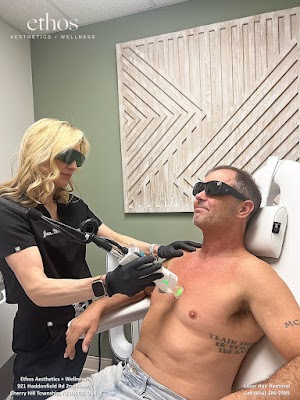
What laser hair removal actually does
Every true laser hair removal treatment targets pigment located in the hair shaft and the bulb inside the follicle. The device emits a specific wavelength of light that the melanin in the hair absorbs. That absorbed energy converts to heat, which disables structures that drive hair growth. The principle is selective photothermolysis, selective because properly delivered energy heats the follicle more than the surrounding skin.
Not all devices are the same. In professional settings you will see three main classes of technology:
- Alexandrite lasers at 755 nm, efficient on lighter skin tones with brown to black hair. Often the fastest for large areas like legs. Diode lasers around 800 to 810 nm, a versatile workhorse for many skin types. Good balance of speed, comfort, and efficacy. Nd:YAG lasers at 1064 nm, the safest choice for dark skin thanks to deeper penetration and less melanin absorption by the epidermis.
IPL is not a laser. It is intense pulsed light, a broad spectrum filtered and pulsed. Good operators can achieve hair reduction with IPL, but in my hands true lasers are more consistent and safer across a range of skin types, especially for laser hair removal for dark skin.
Hair grows in cycles. Only hairs in the active growth phase, anagen, contain a full bulb with enough pigment to make a strong target. That is why one session does not solve the problem. You are chasing different groups of hairs as they enter anagen. On a woman’s face, that cycle turns over quickly, so sessions are closer together. On the legs, the cycle is longer, so appointments spread out. This is also why results appear progressively, not all at once.
Who is a good candidate
The best response comes from hair that is darker than the surrounding skin. Black or deep brown hair on pale or medium skin soaks up laser energy cleanly. Darker skin types require devices and settings that deposit energy where it is needed while avoiding the epidermis. That is where Nd:YAG technology shines. Laser hair removal for light skin gives wide latitude across all devices, so a clinic can select for speed and comfort.
For very light, red, or gray hair, lasers struggle because the target pigment is scarce. I sometimes see clinics selling packages to women with ash blond vellus hair on the cheeks, only to deliver little change. That is a mismatch. Upfront honesty matters here. If you have blond fuzz on the face, permanent hair removal with electrolysis may be the better long game. It is slower and more painstaking, but it does not rely on pigment.
Skin that is prone to keloids, active infections in the treatment area, or someone taking photosensitizing medications, all require discussion before booking. If you have a history of melasma, post inflammatory hyperpigmentation, or recent tanning, we modify the plan. Laser hair removal for sensitive skin is less about the word sensitive and more about the technician’s eye for skin response and their willingness to take it slowly.
Areas that respond well, and those that ask for finesse
Most women start with the underarms or bikini line. They are quick zones with high payoff, and the contrast of dark hair against lighter skin tends to be favorable. Legs and arms are also straightforward, though sessions are longer simply due to acreage. Facial areas like the upper lip and chin demand more attention to settings, pulse stacking, and overlap because the hair can be coarse in a tight space.
I will often map a course like this: start with underarms and bikini to build confidence in the process, then move to legs once you have seen results and you know you tolerate the sensation. Women with PCOS or other hormonal drivers often focus on the chin, neck, sideburns, or lower abdomen. Laser hair removal for hormonal hair can deliver meaningful reduction, but maintenance is part of the deal. Hormones keep sending new recruits, so occasional touch ups keep things tidy.

Full body laser hair removal or whole body laser hair removal packages compress all of this into a single plan. They make sense for women who are ready to commit and value seeing progress everywhere at once. Just verify the fine print. Some clinics exclude the face, others limit sessions per area. Whole body sessions take time. Count on 2 to 4 hours depending on device speed and your build.
Private, intimate, genital, or pubic area work should be approached by a seasoned provider. A standard bikini line is the hair outside a basic panty, while a Brazilian clears the labia and perianal area. If a clinic lists laser hair removal private parts without detailing what is included, ask. Safety and draping should be taken as seriously as in a surgical prep. Good providers are unflappable, communicate clearly, and make privacy non negotiable.
Expected number of sessions and timelines
For most body areas, women need 6 to 8 sessions to reach the first plateau of results. Face can take 8 to 12, both because of faster cycles and because hormonal input keeps hairs returning. Spacing starts at 4 to 6 weeks for facial areas, 6 to 8 weeks for underarms and bikini, and 8 to 10 weeks for legs and arms. The spacing often stretches as you move deeper into a series, because fewer hairs are cycling into anagen.
After the core series, maintenance is reality based. Some women do not return for one to two years and only see sparse regrowth. Others, especially those with PCOS, schedule a maintenance session every 3 to 6 months for the first year, then less often. The word permanent is loaded. Permanent laser hair removal in marketing means long term, stable reduction. In clinical terms, the FDA allows claims of permanent hair reduction, not total and irreversible removal everywhere.
What results look like in practice
The first few sessions thin and soften. Hair that does regrow tends to be lighter and slower. Underarms often show a 50 percent reduction by session four. Bikini lines can feel 70 percent easier to manage by session five. Legs require patience because the cycle is long. Around session six, you get the moment that clients tell me about in the hallway, when they travel for a week without packing a razor and it does not matter.
Laser hair removal for ingrown hairs is an underappreciated benefit. By reducing the number of coarse hairs that curl back on themselves, you flatten the terrain. I have watched women who battled painful bikini ingrowns for years breathe easier after a few sessions. That benefit tends to appear early, because ingrowns are tied to density and sharpness more than absolute hair count.
For facial hair, before and after comparisons can be striking, but do not expect a perfect porcelain finish. A good outcome is a lower daily management burden, less shadow, and fewer episodes of irritation. Laser hair removal face work around the upper lip, chin, cheeks, and sideburns demands even light pressure with the handpiece and precise overlap so you do not miss patches. If someone is rushing a 10 minute face, slow them down.
Pain, comfort, and what helps
Does laser hair removal hurt, and how much? Sensation varies by device, area, and hair density. Underarms with dense, coarse hair can sting like a rubber band snap in the first pass, then calm as the bulk clears. Legs usually feel mild to moderate. The face, especially the upper lip, is snappy. Cooling methods make a big difference. Modern diode and alexandrite systems pair contact cooling with chilled sapphire tips. Cryogen spray on Candela alexandrite and Nd:YAG platforms creates a millisecond cold shield. Other devices use forced cold air.
Topical anesthetic is an option for sensitive zones like the Brazilian, though cooling and skilled technique usually suffice. I prefer to avoid thick layers of numbing cream on large areas because it can occlude and alter skin feedback. Simple steps help more than people expect: arrive well hydrated, skip caffeine right before your appointment, and keep the skin free of lotions or oils so the handpiece glides and sensor readings are accurate.
Safety, side effects, and skin of color
When performed by trained clinicians using the right device for your skin type, laser hair removal is safe. The most common side effects are short lived redness and perifollicular edema, the tiny goosebump like swelling around each follicle that tells us we delivered a proper dose. Mild warmth and tingling fade within hours. Pigment changes can occur, usually transient. Post inflammatory hyperpigmentation is more common in darker skin tones if energy is too high or if there is recent sun exposure.
True burns are a sign of misuse. They can be prevented by patch testing, conservative settings early on, and avoiding freshly tanned skin. Laser hair removal for dark skin requires respect for melanin. Nd:YAG at 1064 nm is forgiving because the epidermis absorbs less of that wavelength. I have treated Fitzpatrick V and VI clients safely for years with Nd:YAG settings that climb slowly as we see how the skin responds. Avoid IPL on dark skin for hair removal. The wide spectrum makes overlap with epidermal melanin too likely.
Ingrown flare ups are uncommon during a series, but they can show if someone shaves aggressively in between. I encourage a light touch, sharp blade, and shaving with the grain 24 to 48 hours before appointments. Folliculitis sometimes appears on backs and shoulders, especially in athletes. Gentle benzoyl peroxide wash in the shower a few times a week can help. For anyone prone to cold sores, pretreat the upper lip with an antiviral if we are working near the mouth.
Home devices versus professional treatments
Home laser hair removal or IPL devices can thin hair with consistent use, but energy levels are far lower than medical systems. Think of them as maintenance tools for small areas or as a way to keep regrowth soft between professional sessions. If your goal is a real reset on legs or a Brazilian, professional laser hair removal delivers in six to eight visits what a home device might attempt over many months with modest change.
One exception is someone with hair too light for medical lasers. Home IPL can sometimes keep very fine, light hairs less visible. This is a cosmetic management strategy, not permanent hair removal. Eyebrows, ears, and nose should not be treated with either professional or home devices. The risk to eyes and delicate structures is not worth it.
Comparing to waxing, shaving, and electrolysis
Shaving is fast and cheap, but for many women it invites razor burn, shadow, and daily maintenance. Waxing delivers a clean look for a few weeks, then a cycle of grow out, wax, and wait. Over years, costs add up. I have clients who spent more than the price of a full leg laser series on bikini waxes alone in three summers.
Electrolysis is the only method recognized as truly permanent hair removal at the follicle level because it does not rely on pigment. It is the gold standard for light hairs and for finishing work on small zones where laser cannot catch every straggler. It is slow, and the skill of the electrologist matters as much as the machine. For large areas like legs or back, laser hair removal is more efficient by an order of magnitude.
How much it costs, and what affects price
Pricing varies by city, device, and business model. Packages reduce per session cost, and clinics sometimes run seasonal laser hair removal specials or financing for multi area plans. Here is a realistic snapshot from medical spas and dermatology clinics in North America and the UK, converted to local currencies where relevant. Expect higher prices in major metro centers and lower in smaller markets.
- Underarms: 50 to 150 USD per session, often bundled in packages of 6 for 250 to 600. In London, 40 to 100 GBP per session is common. Bikini line: 100 to 200 USD per session. Brazilian: 150 to 300 USD. Packages often shave 20 to 30 percent off. Full legs: 250 to 500 USD per session. Half legs: 150 to 300 USD. Lower legs price higher than thighs due to density and desired clearance. Face areas: upper lip 40 to 100 USD, chin 60 to 120 USD, full face 150 to 300 USD. Expect more sessions. Full body laser hair removal packages range widely, 1,500 to 4,000 USD for 6 sessions in many clinics, depending on how many areas are included and device speed.
Clinics that advertise cheap laser hair removal are not necessarily low quality, but low headline prices sometimes hinge on older IPL systems, limited session times, or strict fine print that caps the number of pulses. Ask how long a session typically takes and which device they use for your skin type. If you are comparing, use per session math with the number of sessions you are likely to need, not just the sticker on session one.
Choosing a clinic and technician
The best laser hair removal service is not a brand name on the door, it is a combination of device, settings, and hands. A certified laser hair removal technician working under medical oversight is ideal, especially for higher Fitzpatrick types or intimate areas. Dermatology clinics are excellent if you want physician supervision and a clear pathway to manage side effects. Medical spas can be equally strong if they invest in training and keep protocols current.
When you search laser hair removal near me, look past ads and into reviews that mention specific devices and results over months. During a consultation, you want a technician who examines your hair and skin in good light, talks through diode, alexandrite, or Nd:YAG options, and gives plain answers about laser hair removal how many sessions you will need and what maintenance might look like. Patch testing on your skin type is a mark of care. Rushed sales pitches and guaranteed promises of permanent laser hair removal for blond facial hair are red flags.
A note on skin tones, hair textures, and special cases
Laser hair removal for thick hair behaves differently from fine hair. Coarse, dark hairs give a satisfying pop of response and fade quickly across a series. Fine dark hair can take more sessions and careful energy titration to avoid stimulating growth at the margins, a phenomenon known as paradoxical hypertrichosis. It is rare, more often associated with low energy IPL, and most likely on the face. Judicious settings and true lasers keep risk low.
Laser hair removal for coarse hair on the chin in a woman with PCOS will improve shadow and reduce ingrowns, but will not outpace the endocrine system completely. Pairing treatment with medical management of hormones gives better long term results. For laser hair removal for sensitive skin, consider starting with a single area and conservative settings, then build as you see how your skin settles.
For women with deeper complexions, laser hair removal for dark skin is absolutely feasible in skilled hands. I routinely use Nd:YAG on Fitzpatrick V and VI at fluences and pulse widths tailored to hair caliber. Sessions take a bit longer because I like to watch tissue response after the first passes. If the clinic only offers IPL and you have dark skin, keep shopping.
What a typical course feels like, week by week
Session one is often the most noticeable. You arrive with hair trimmed to stubble, we outline borders, set parameters, and do a test pass. You will feel zaps that range from tickly to sharp depending on hair density. Skin flushes, follicles swell slightly, and you cool for a few minutes before leaving. Over the next 7 to 14 days, treated hairs shed. It looks as if hairs are growing, but they are sliding out. Gentle exfoliation helps.
By session two or three, you are shaving less often. Underarms start to feel smooth for days at a time. By session four or five, the bikini line behaves. Stray hairs are finer. Legs turn a corner closer to session six, when you realize morning showers are shorter. If we are treating the face, upper lip shadow fades and the chin is easier to manage, but we keep up the rhythm because new anagen hairs are always arriving.
After the core series, you schedule based on what you see. Some areas are done for now. Others get a touch up every few months. If you move or travel, you can pick up in another clinic. Laser hair removal sessions cost and device types vary, so bring your prior settings if possible. A photo of the screen or a printout helps keep continuity.
Care before and after, distilled
- Four to six weeks before you start, stop waxing, plucking, and depilatory creams on the target area. Shaving is fine. Avoid sun exposure and self tanners, and tell your provider about any new medications. The day before your appointment, shave the area closely. Skin should be clean and dry, no heavy lotions, oils, or deodorants. If you are prone to cold sores and we are treating the lip, start antiviral prophylaxis 24 hours prior per your prescriber. Immediately after treatment, expect redness and tender follicles for several hours. Cool packs and fragrance free moisturizer help. Skip hot yoga, saunas, and tight clothing that chafes for the rest of the day. For 48 to 72 hours, keep the area out of direct sun and apply broad spectrum SPF. Do not pick or scrub at shedding hairs. Let them release naturally with light exfoliation in the shower. Between sessions, shave if you like. Do not wax, pluck, or thread, as those remove the target for your next visit. Reschedule if you have tanned significantly.
Device names, settings, and what to ask
You do not need to operate the laser, but knowing a few terms helps you evaluate care. On alexandrite and diode systems, expect discussion of fluence in joules per square centimeter, pulse duration in milliseconds, and spot size in millimeters. Larger spot sizes penetrate slightly deeper and cover territory faster. Nd:YAG devices often use longer pulse widths, which is one reason they are gentler on dark skin.
Ask your provider which platform they will use for you and why. If you are a Fitzpatrick IV or above, ask how they prevent epidermal injury. If the answer includes Nd:YAG, adequate cooling, test spots, and incremental titration, you are in good hands. For laser hair removal for light skin, fast alexandrite with good cooling is efficient. Diode remains a versatile choice for mixed areas.
Budgeting and making the numbers work
If you are building a plan, you can assemble areas over time. Start with underarms and bikini for six sessions, which in many markets can be done for a combined 800 to 1,200 USD on package pricing. Add legs later, spreading cost across seasons. Some clinics offer laser hair removal packages that bundle multiple areas at a discount or extend payments with no or low interest. Laser hair removal financing is reasonable to consider if it keeps you with a high quality clinic rather than pushing you toward a bargain with questionable oversight.
Keep an eye on reputable laser hair removal deals, but read terms slowly. A low per session price that includes a strict time cap can lead to rushed work. Conversely, a slightly higher sticker at a clinic that schedules longer blocks and uses a fast, well maintained device may give better value per hair removed.
A few candid anecdotes from practice
A marathoner with Fitzpatrick V skin and ingrowns on the bikini line arrived after years of waxing that left her with scarring and hyperpigmentation. We used Nd:YAG exclusively, started with conservative fluence, and spaced sessions at 6 weeks. By session three, ingrowns were rare. By session six, she no longer had to choose training shorts based on chafe. Pigment evened out over the following months with strict SPF and patience.
A new mom with PCOS came for laser hair removal chin and neck after pregnancy triggered a surge in coarse hairs. We built a series of ten sessions on a diode laser, then quarterly maintenance. She paired this with her endocrinologist’s plan. Five years in, she books touch ups twice a year, keeps a simple razor for the odd straggler, and no longer worries about five o’clock shadow in baby photos.
A blond client asked for laser hair removal cheeks for soft peach fuzz that showed in certain lighting. We had a hard conversation about limitations. She went with targeted electrolysis for a few coarse hairs Cherry Hill Township laser hair removal near the sideburns, skipped the rest, and saved herself a lot of disappointment. Honesty on day one beats selling a package that biology will not support.
Final thoughts from the treatment room
Laser hair removal for women works best when it is tailored, not templated. Device choice should match skin tone and hair color, settings should evolve as density drops, and timelines should flex with your response. The goal is not to sell you everything, it is to reduce friction in your life where unwanted hair has been a drag.
If you leave a consultation feeling informed, with a clear map of sessions, realistic expectations about results, pricing that matches your budget, and confidence in the technician, you are on the right track. If you feel rushed, confused about devices, or pushed into a one size fits all full body laser hair removal plan without nuance, keep looking. A good course of laser hair removal is a partnership between your biology, a well chosen machine, and a careful pair of hands.